What to Delegate to AI and What Time to Keep for People in 2040 Hospitals: Generative AI for Hospital Managers, Clinicians, and Developers
Contents
- Two Habits of Generative AI
- Four Changes in Generative AI
- What to Delegate and What to Keep in Clinical Documentation
- Handle Patient Information Only in Contracted Environments
- Contracts Determine What AI Can Read
- Delivery Changes How Accurate Information Lands
- Holding a Wide-Angle View as an Interprofessional Team
- Frequently Asked Questions from the Front Lines
- How to Use the Time You Gain
- References
Around 2040, the number of older adults in Japan is expected to peak. The summary report that underpins the new regional healthcare plans projects that the working-age population will decline nationwide while the number of older adults, especially those aged 85 and over, will keep rising until it peaks around 20401. People aged 85 and over often need both medical and long-term care; compared with 2020, emergency transports of people aged 85 and over are projected to rise by 75% and their demand for home medical care by 62% by 20401. Japan is estimated to need 10.7 million workers in healthcare and welfare in 2040, but only 9.74 million are expected to be available2. Because demand is rising while the workforce shrinks, 2040 has become a key planning milestone.
Summary report on the new regional healthcare plans (Dec 2024); MHLW Annual Report 2022
On August 5, 2026, the Director-General of the Health Policy Bureau at Japan's Ministry of Health, Labour and Welfare (MHLW) issued a notice titled "Preparation of Regional Healthcare Plans"3. Under the revised Medical Care Act, the new regional healthcare plans cover not only hospital beds, but also outpatient and home care, coordination between medical and long-term care, and securing healthcare workers. Using the phrase "toward 2040 and beyond," the plans are required to project bed capacity needs and the roles of medical institutions for 2040.
On October 29 of the same year, materials from the Study Group on Promoting Work-Style Reform for Physicians summarized the key points of discussion: the need to further improve operational efficiency using ICT, AI, and related tools; the effectiveness of AI and voice input for efficiency and scaling up good practices across sites; and broader use of physician clerical assistants4. AI has entered the national policy conversation as a way to sustain healthcare amid a shrinking workforce.
Two Habits of Generative AI
Large language models write by predicting the next word from the text so far. Given "The cause of the fever is," they choose a plausible continuation from candidates such as infection, drugs, or malignancy. Because the choice is based on plausibility, they can write something untrue in a convincing way. This is hallucination5. Current models are also tuned toward answers that people rated highly6, which makes them prone to sycophancy: going along with the user's views7.
For how much hallucinations have declined and what to watch out for when citing literature, see "Hallucination Improvements in Gemini 4 Hydrogen: Caveats and Workarounds for PMIDs and DOIs."
Four Changes in Generative AI
Recent generative AI has changed in four main ways.
| Shift | What it can do now | What to watch out for |
|---|---|---|
| Plans steps before answeringReasoning models | Map out steps with chain-of-thought (CoT) before answering and show intermediate steps | Visible reasoning steps do not guarantee the answer is right |
| Checks sources before answeringRetrieval-augmented generation (RAG) | When connected to web search or files, returns answers with supporting URLs | Answers without URLs come from pretraining knowledge; the user must verify the source |
| Works through tasks on its ownAgentic AI (AI agents) | Uses tools such as search, files, and code execution to repeat planning, action, observation, and revision. Examples: Claude Code, Codex | It can take irreversible actions such as deleting or overwriting files. Be careful how much access and which operations you grant |
| Acts without waiting for promptsAlways-on, proactive AI | Triggers on a schedule or incoming email, asking a person only when judgment is needed. Examples: Muse, dots | Connect only your own email and calendar; never link workplace email or patient information to a personal AI |
The first category, reasoning models, are trained to work through steps internally before answering. Writing out intermediate steps was already known to improve accuracy, an approach called chain-of-thought (CoT) prompting8; reasoning models build these steps themselves before answering. OpenAI announced this type of model in September 2024, reporting that giving the model more time to think improved its accuracy on difficult problems9. The second is retrieval-augmented generation (RAG), an approach that searches external sources before constructing an answer10. Many current chat-based AI systems combine web search and file lookup to respond with supporting URLs.
The third, agentic AI (AI agents), gives a large language model tools and lets it repeat planning, action, observation, and revision; such agents are now available in forms clinicians can use directly on their own computers. Anthropic's Claude Code is a tool that reads files on a computer, runs commands, and carries out tasks11. OpenAI's Codex similarly takes instructions and works autonomously on code and documents12. Both can make irreversible changes, such as deleting or rewriting files on their own. Be careful about which folders they can see, which operations they may perform, and how far their permissions extend.
The fourth category—always-on, proactive AI that acts without waiting for instructions—began rolling out to the general public from major companies in the fall of 2026. OpenAI describes "dots" as sometimes acting even before you think to ask13. In the future, similar systems could organize records even while clinicians have the EHR closed, preparing a brief of the previous course and key points to check before the next visit.
For work that involves no patient information, uses like the following are possible.
| Shift | Example use |
|---|---|
| Reasoning models | Have it list the changes in a draft revision of hospital rules and the departments affected; have it write review questions and explanations for staff training |
| Retrieval-augmented generation (RAG) | Load hospital rules and procedure manuals and have it answer staff questions while pointing to the relevant section |
| Agentic AI | Have it draft minutes and reports from the materials and recording transcripts in a committee folder; have it turn a summary table into meeting slides |
| Always-on, proactive AI | Have it send a list of today's deadlines and pending replies each morning, drawn from your own email and calendar |
Convenience and Dependence Concerns Around Personal AI "Muse"
In September 2026, Meta launched its personal AI agent "Muse" in the United States, and began offering it in Japan on October 2314,15. According to Meta, Muse does not just answer questions—it actually gets work done. When given a goal, it creates a plan, opens a browser to fill out forms, continues working even after the app is closed, and notifies the user when circumstances change or approval is needed14. It remembers minor details mentioned only once and may offer suggestions before being asked. Meta explains that Muse's memory was trained to distinguish between temporary information and long-term information16.
On the safety side, users choose which apps to connect and what permissions to grant, with confirmation required before sending messages or making purchases; activity logs can also be reviewed, and users can ask Muse to "forget" information14. Meta further notes that Muse runs in an isolated virtual machine for each user, uses a separate agent to manage internet access, and does not share conversation content with Meta's advertising systems15.
At the same time, a system that responds constantly, retains persistent memory and persona, acts before being asked, and tends to agree with the user can easily shift from a tool into someone to rely on—design traits associated with emotional dependence on AI (discussed in detail in "When People Lean on AI as Someone to Rely On"). In a four-week randomized controlled trial of chatbot use (n = 981), no differences were observed across assigned usage conditions, yet participants who voluntarily used the chatbot more heavily tended to score worse on measures of loneliness, emotional dependence, and problematic use17. A survey finding that people with greater psychological distress were more likely to confide in generative AI is described in "The Greater the Psychological Distress, the More People Confided in Generative AI," and lawsuits involving companion AI in "Lawsuits Over Character.AI and the Risks and Benefits of Companion AI."
What to Delegate and What to Keep in Clinical Documentation
When delegating routine tasks to AI, divide work by two criteria: who bears responsibility if an error happens, and whether the counterpart is a person. While AI can draft summaries and organize notes, verifying and finalizing content—and deciding what to share and what to hold back while talking with patients and families and taking responsibility for that care—remains human work.
In Japan, one published example is Aizawa Hospital in Matsumoto, Nagano Prefecture. According to a July 1, 2026 press release from Ubie, a generative AI vendor, using voice input and AI summarization reduced the time to document pre-discharge conferences from 60 minutes to 10 minutes18. The number of pre-discharge conferences rose from 4 per month to a peak of 20 per month, and billing claims for the joint discharge guidance fee increased from 2 per month to a peak of 14 per month. Post-implementation figures represent the highest single month and come from a vendor-announced before-and-after comparison. Shorter documentation time enabled more conferences, and holding more conferences increased reimbursement claims. Planning ahead for which meetings to expand and which reimbursements follow makes the case for adoption much easier to explain inside a hospital.
- Documentation time60 min → 10 min (voice input and AI summarization)
- Conferences held4/month → up to 20/month
- Joint discharge guidance fee claims2/month → up to 14/month
Ubie press release (July 1, 2026). Post-implementation values reflect the highest month
The second example is Nara City Hospital, featured as Case 10 in MHLW's August 2026 report "Getting Started with Nursing DX: Case Studies for Medical Institutions." There, generative AI creates a template draft of the nursing summary from clinical records, and nurses check and edit it against the underlying medical record19. The project covered about 200 full-time ward nurses, with impact evaluation from October 2025 to February 2026. Measured by electronic health record (EHR) logs, median creation time per summary dropped from 20 minutes to 4 minutes (for cases completed within 24 hours). In the same report, nurses' self-reported mean creation time went from 25.1 minutes to 14.6 minutes. The report also noted that 3.8% of nurses said they felt uneasy about how patient information was handled. When reviewing AI-generated summary drafts in practice, clinicians need to watch in particular for scrambled timelines—such as older findings overriding newer test results—and misjudged clinical weighting between major findings and minor details.
Outside Japan, large studies of ambient documentation (AI scribes)—systems that listen to outpatient clinician-patient conversations and draft clinical notes—were published in 2026 in Annals of Internal Medicine (Booth et al.)20 and JAMA (Rotenstein et al.)21.
| Report | Setting and method | Results |
|---|---|---|
| Aizawa Hospital (vendor announcement) | Pre-discharge conference records, before and after | Documentation time 60 min → 10 min; conferences 4/month → up to 20/month |
| Nara City Hospital (MHLW casebook) | Nursing summaries, ~200 full-time ward nurses, before and after | Median 20 min → 4 min (EHR logs); mean 25.1 min → 14.6 min (self-report) |
| Booth et al. (Ann Intern Med) | 14-hospital Boston health system, 902 outpatient clinicians, retrospective interrupted time-series analysis | Small ~1.2-minute drop in documentation time right after enrollment; no association with same-day/after-hours note completion or productivity metrics |
| Rotenstein et al. (JAMA) | Five US academic medical centers, 8,581 clinicians | Per 8 hours of clinical care, time in the EHR fell by 13.4 minutes and note-writing time fell by 16.0 minutes |
Sources: References 18–21
Other initiatives are using AI to sort incoming patient phone calls at the start of clinic hours (the "inbox problem") or to conduct preliminary phone intake and triage. Even so, facilities must always consider whether older adults less familiar with AI might find it harder to access care, and design workflows that fit the people in their community.
On the policy front, Japan's FY2026 (Reiwa 8) medical fee revision added "organizational adoption and routine use of a generative AI–assisted documentation system" and "training on appropriate use of generative AI" to the facility standards for the Physician Clerical Assistant System Addition22. Training is expected roughly once a year and, in principle, includes physicians.
Handle Patient Information Only in Contracted Environments
The regulatory basis for handling patient data in Japan is known as the "Three-Ministry, Two-Guideline" framework, combining MHLW's "Guidelines for the Security Management of Medical Information Systems" (Version 7.0) with vendor guidelines issued jointly by the Ministry of Economy, Trade and Industry (METI) and the Ministry of Internal Affairs and Communications (MIC)23. The September 2026 Q&A (Planning and Management Volume, Q18) clarified entering medical information into generative AI prompts24: if a contract or similar agreement guarantees that entered data "will not be retained for AI training or similar purposes," services hosted on servers outside Japanese legal jurisdiction may still be used. Free consumer services used individually by staff lack such a contract. Turning off model training in user settings does not constitute a contract.
The Aizawa Hospital and Nara City Hospital examples above both fall under "Use in an institution-contracted environment."
When you need to ask a general-purpose AI about a real patient's clinical question, generalize the information first. Removing names and addresses alone is not enough. As a rule of thumb, strip out proper nouns, dates, facility names, and images; group age into three bands (child, adult, or older adult); and describe lab results simply as "high" or "low." Then reframe the question in P (Patient), I (Intervention), C (Comparison), O (Outcome) format, which is the same process as the first step of evidence-based medicine (EBM): formulating a clinical question.
| Item | Rule of thumb | In the fictional case |
|---|---|---|
| Proper nouns, facility names, images | Remove | (Omitted) |
| Dates | Remove | Night of hospital day 3 → Omit |
| Age | Three bands: child, adult, older adult | 78 years old → Older adult |
| Lab values | Express as "high" or "low" | (If needed, "high blood glucose") |
| Diagnoses and status | Only what the question requires | Parkinson's disease, type 2 diabetes, hyperactive delirium |
| Element | Question for this case |
|---|---|
| P (Patient) | Older adult with Parkinson's disease and type 2 diabetes experiencing hyperactive delirium |
| I (Intervention) | Use medication |
| C (Comparison) | Prioritize treating underlying causes |
| O (Outcome) | How symptoms and adverse effects differ |
Contracts Determine What AI Can Read
Commentators have pointed out that while general-purpose AI can read open-access articles and abstracts, it cannot read the full text of subscription journals25. If what it can read is skewed, its evidence base may skew toward open-access papers and abstracts. Even when citations appear, the AI may not have read the full text.
Medical-specific AI tools sign agreements with publishers to use journal articles as source material. OpenEvidence holds multi-year agreements with NEJM and JAMA Network, and can also reference NCCN guidelines and Cochrane systematic reviews26. On March 31, 2026, Mount Sinai Health System announced it would make OpenEvidence accessible directly inside its Epic EHR27—an organizational contract embedded into clinical workflow; when nurses and pharmacists as well as physicians can consult the same tool inside the EHR, it also helps align knowledge across professions. However, access is limited to healthcare professionals who register with credentials such as an NPI. Accuracy data have also been reported: on 100 difficult, board-exam-level 10-option multiple-choice questions, Quick Consult (answering in seconds) scored up to 34% and Deep Consult (taking several minutes) scored up to 41%28. This was a small preprint study. Even when an AI has publisher agreements, you still need to verify its answers yourself.
| What it can read | Caveats | |
|---|---|---|
| General-purpose AI | Open-access papers, abstracts, publicly available web documents | Reportedly cannot read full text of paywalled journals; risk of biased evidence base |
| Medical-specific AI (e.g., OpenEvidence) | Articles from contracted publishers (NEJM, JAMA Network, etc.), NCCN guidelines, Cochrane systematic reviews | Eligibility restrictions apply; a preprint reported top accuracy of only 34%–41% |
Let us test this with a fictional case: a 78-year-old man with Parkinson's disease and type 2 diabetes is hospitalized for aspiration pneumonia. On the night of hospital day 3, he becomes restless and is diagnosed with hyperactive delirium. Generalized, the case is "older adult, Parkinson's disease, type 2 diabetes, hyperactive delirium." Ask an AI what medication to use for his delirium, and it may reply, "Avoid haloperidol in patients with Parkinson's disease. Quetiapine is an option and is listed as usable in international guidelines. Start at a low dose."
Yet in Japan's package insert for quetiapine, patients with diabetes and those with a history of diabetes are contraindicated29, because marked hyperglycemia is reported to lead to fatal outcomes such as ketoacidosis. The German Society of Neurology guideline does state that quetiapine can be used for delirium in Parkinson's disease30. For delirium in Parkinson's disease alone, the drug is sometimes used in Japan as well, but because this patient also has type 2 diabetes, it is contraindicated under the Japanese package insert.
When AI makes a mistake, it pulls the user's judgment along with it. In a randomized trial of 44 physicians who completed 20 hours of AI literacy training, diagnostic accuracy was 84.9% when AI suggestions were error-free, but fell to 73.3% when erroneous suggestions were mixed in31. In a thoracic imaging study, the rate at which clinicians flipped to a wrong diagnosis after an erroneous AI suggestion was 60.6% for residents and 32.4% for radiologists32. Less experienced clinicians were more likely to follow the AI. Over-reliance on AI recommendations is called automation bias. The countermeasure is to form your own clinical judgment before looking at the AI's output.
Qazi et al. (NEJM AI 2026), Song et al. (AJR 2026)
On how far AI should be entrusted, the Japan Medical Association's April 8, 2026 report "Clinical Issues and Bioethics Related to AI" organizes applicability into three tiers33.
| Task | Applicability |
|---|---|
| Documentation and summarization | Applicable |
| Suggestions for testing or prescribing | Use with caution |
| Replacing definitive diagnosis or final emergency decisions | Difficult to apply |
Explicitly states that final judgment and responsibility for definitive diagnosis rest with the physician
Nursing summaries and pre-discharge conference notes sit in the "Applicable" tier. If a hospital is introducing AI, starting here is the most practical first step.
Delivery Changes How Accurate Information Lands
Even when AI makes accurate information easier to obtain, whether a patient accepts it when you share it is another matter. Most people know smoking harms their health, yet few quit right away just because someone says, "It's bad for your health, so let's stop."
In the Smoking Cessation Clinic Simulator I built and published, users play the role of physician responding to a fictional patient, Tama Nekota (a salesperson in his 50s visiting a smoking cessation clinic for the first time at his family's urging). Mr. Nekota replies aloud, each response receives a ◎, △, or ✕ rating, and a scene-by-scene debrief appears at the end. For work that contains no patient information, even consumer-accessible AI lets you build tools like this. I explored what it means to practice safely with AI simulated patients in "A Safe Place to Fail, and a Place to Take Responsibility."
The core information is the same; what differs is what comes before and after
The "Correcting immediately" response is also factually accurate—quitting smoking benefits health at any age34. What differs is the sequence: reflecting both sides of the patient's ambivalence ("wanting to quit, yet not being able to"), asking permission before giving information, and finally asking what the patient thinks. These communication skills affect not only how smoothly a visit goes, but also patient experience.
This is where AI sycophancy becomes relevant. Affirmation, a foundation of interpersonal support, means accepting the other person's experience and feelings without dismissing them, and then sharing what needs to be said. Sycophancy, by contrast, means agreeing to keep the user satisfied—a direction AI drifts toward by design. More people are consulting AI about health concerns, yet an answer that feels comforting is not necessarily therapeutic; catering too readily to the user can even help them rationalize unhelpful habits ("forget it, I am different from everyone else") and reinforce them. Keeping the treatment goal in view and helping prompt behavior change remains a role that grows more important for clinicians as AI spreads.
Holding a Wide-Angle View as an Interprofessional Team
AI works like a magnifying glass or binoculars: it helps you look deeply into what you are already focused on, while leaving areas outside that focus thin. When a physician uses AI, it deepens the medical perspective; when a nurse uses AI, it deepens the nursing perspective. Unless team members bring their observations together, the patient's own wishes and differences across professions never reach any AI. When each discipline clarifies its own contribution and shares it openly, the team gains a broader view.
| Profession | Focus easily deepened with AI |
|---|---|
| Physician | Diagnosis and treatment plan |
| Nurse | Daily living and observing changes in it |
| Pharmacist | Real-world medication use and adherence |
| Physical therapist, etc. | Mobility and home environment |
| Easily missed by every single role | The patient's own wishes; differences in perspective across professions |
Consider a fictional discharge planning meeting (the same four steps and ways to practice them are detailed in "Reskilling Clinicians and Building Teams in the Era of Generative AI"). A patient in their 80s hospitalized for pneumonia is preparing to return home. A physician, ward nurse, pharmacist, physical therapist, and social worker meet in person, with a care manager joining by phone.
- Each profession writes firstBefore viewing AI output, briefly note what you observed, what remains uncertain, and what you prioritize
- Supplement with AIAsk for evidence, alternative hypotheses, and missed points, labeling AI-generated suggestions clearly
- Check discrepancies and gapsExamine why opinions differ, flag unsupported AI claims, and check for mismatches with the patient's wishes or living conditions
- Decide togetherRecord what was adopted or rejected, why, and who owns each follow-up action
Frequently Asked Questions from the Front Lines
What should we verify when handling patient information with generative AI?
As noted above, medical institutions follow MHLW's security management guidelines23 and service providers follow the MIC/METI guidelines35. For services hosted on overseas servers, a contract or equivalent agreement must guarantee that entered medical information will not be retained; a general statement that data are "not used for training" is not enough24. Institutions are also required to record user access logs and review them periodically36.
The more an organization builds services in-house, the more security vulnerabilities and maintenance burdens it takes on. In organizations with few AI and security specialists, working with a vendor capable of supporting audit logging, compliance checks, and maintenance is a practical choice. The guidelines include a handbook for facilities without dedicated IT staff that outsource maintenance, covering vendor selection, contract review, and checking disclosed security documentation37. Even when outsourcing, however, management responsibility remains with the medical institution37. Rather than relying on a "guideline-compliant" label alone, verify the contract terms and the division of responsibilities.
Are hospitals already using generative AI integrated with their EHR?
Examples of pairing EHRs and internal clinical records with generative AI are beginning to appear in Japan.
| Institution / Product | Use case | Published details |
|---|---|---|
| Fujita Health University Hospital | Drafts discharge summaries from EHR data for physicians to edit and import | Rolled out to 31 inpatient departments in March 202538 |
| Aizawa Hospital (Ubie) | Creates pre-discharge conference notes via voice input and AI summarization | Documentation time 60 min → 10 min (vendor announcement)18 |
| Nagoya Medical Center (Fujitsu Japan) | Drafts discharge summaries from EHR information | Full-scale operation launched October 31, 202539 |
| TXP Medical "SpeechER" | Formats smartphone voice input into structured clinical notes (for emergency departments) | Launch announcement described cloud processing40; on-premises hospital deployment is also offered41 |
| NEC "MegaOak AI Medical Assist" | Generates draft referral letters, discharge summaries, and other documents from EHR data | Available as a commercial product42 |
Whether a tool actually gets used on the front lines also depends on interface design and rollout. Even a capable tool is rarely opened during a busy clinic if it requires switching to a separate screen; developers need designs that surface the right warning or update naturally inside the EHR workflow. Likewise, in workplaces with staff accustomed to paper records, an abrupt all-at-once switch can drive people away. Introducing tools gradually alongside existing workflows—without over-emphasizing "AI" and starting where staff can immediately feel the reduced workload—is far more realistic.
Are there also initiatives in visiting nursing and home healthcare?
From August to October 2025, Allm ran a pilot across six visiting nursing stations in Nagaoka and Sanjo, Niigata Prefecture (15 nurses, 460 uses)43. Using a feature in its interprofessional collaboration platform "Team" that drafts visiting nursing reports from the previous month's report and current month's care plan and notes, the company reported reducing report preparation time by up to 42%.
The home-care EHR "homis" has announced a feature in which AI analyzes stored clinical data to draft attending physician opinion forms and related documents44. A report from Matsubara Urban Clinic described piloting an AI workflow on a single daytime on-call phone line that transcribes calls and formats them into draft clinical notes45, with staff reviewing and editing the output.
How does this connect to sharing information between medical and long-term care?
Japan's national government is building the Electronic Health Record Information Sharing Service to exchange data across medical institutions. According to July 2026 guidance, shared data comprise three documents—referral letters, discharge summaries, and health checkup reports—and five clinical data categories: diagnoses, infectious diseases, drug allergies, other allergies, and laboratory tests46. Referral letters can also carry the purpose of referral, treatment plan, and handoff notes. Yet lab results and medication lists alone rarely convey why the referral is happening right now, or whether the referring clinician plans to stay involved afterward. Even after AI drafts the letter, adding a brief line in the sender's own words can make regional coordination far smoother.
Physicians often struggle to picture a patient's day-to-day life at home, whereas visiting nurses and care staff hold a wealth of observations about daily living. Turning what they see into writing takes energy, but if spoken notes help draft the record and finalized summaries flow into regional sharing networks, AI can act like a pair of glasses that makes interprofessional communication clearer. Looking ahead, always-on AI that monitors routine notes and flags the next morning that a home visit may be needed sooner is also becoming realistic.
Data linkage is also advancing in policy and research. Linking the National Database of Health Insurance Claims (NDB) with the Long-Term Care Database began in October 202047, requiring separate approval for each dataset48. For personal health records (PHRs) that let individuals manage their own health and medical data, Mynaportal can also link data to external services with individual consent49.
How to Use the Time You Gain
A US time-motion study observed 80 first-year internal medicine residents across 2,173 hours. Out of 24 hours, residents spent 13% (about 3 hours) in direct patient care and 66% on indirect tasks away from patients—with EHR and documentation alone accounting for 43%, or more than 10 hours50.
Plotted from values in Chaiyachati et al. (JAMA Intern Med 2019). "Other" represents the remainder out of 100%
For Nara's nursing summaries, median time per summary fell from 20 minutes to 4 minutes—a difference of 16 minutes. For Aizawa's pre-discharge conference notes, time fell from 60 minutes to 10 minutes—a difference of 50 minutes. Each hospital can decide where to return those 16 minutes and 50 minutes. Reducing overtime is one answer, and reinvesting the time into more conferences and billable guidance, as Aizawa Hospital did, is another. Hospitals can also return it to listening to patients' and families' worries before discharge, or thinking together across professions about how best to help the person in front of them—using AI to carve out time for human-to-human exchange. A 2025 NEJM review similarly outlined strategies to reinvigorate bedside clinical care, positioning AI as a tool to reinforce human observation and judgment51.
Bar lengths are proportional to time
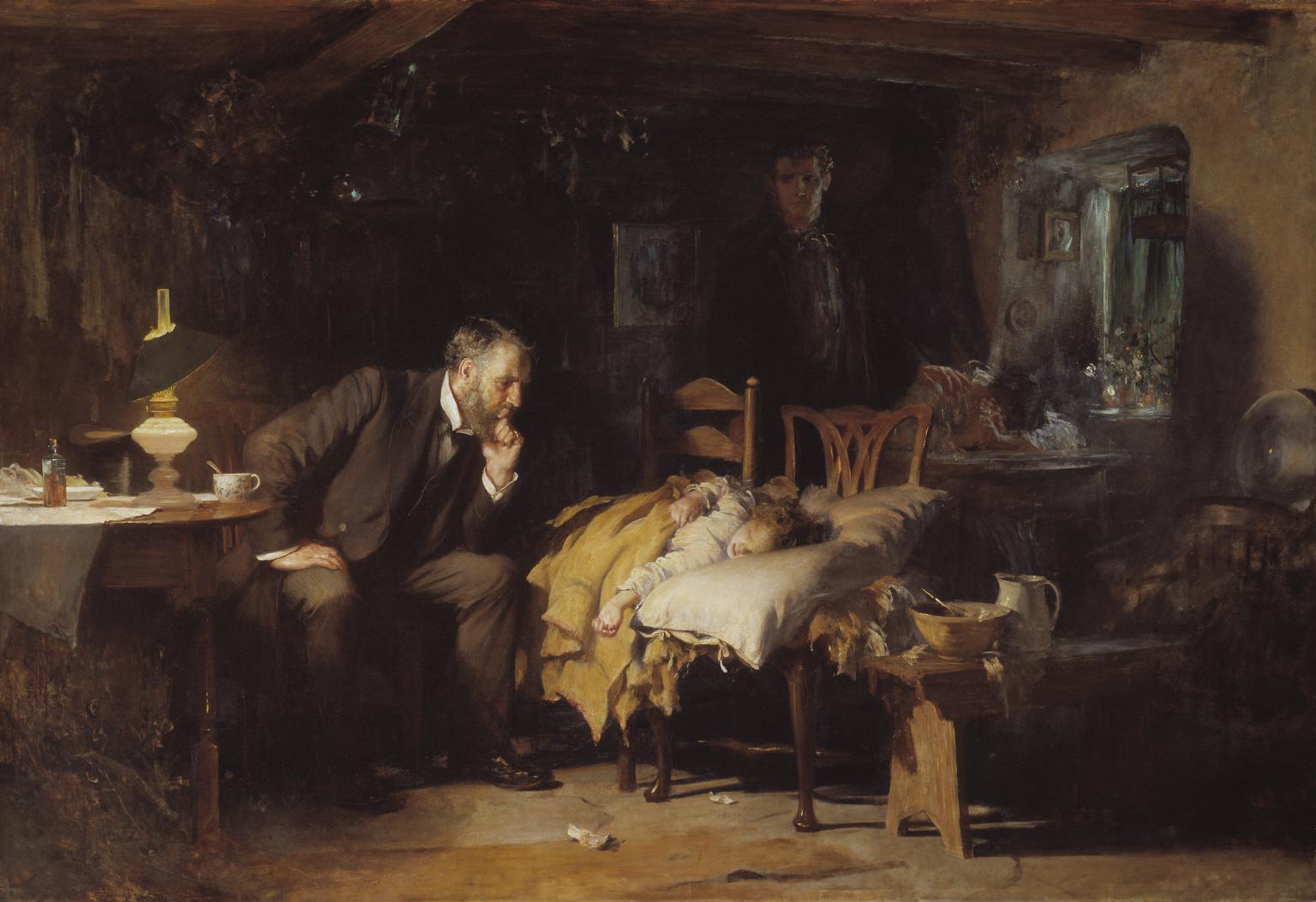
Luke Fildes's painting "The Doctor" (1891) depicts a physician watching over a sick child at the bedside. It was an era before many modern treatments existed, when plenty of illnesses had no cure. Fildes lost his own young son in 1877, and the painting is said to have been inspired by the physician who stayed through the night beside the boy even when nothing more could be done to cure him. In 1927, JAMA published Francis Peabody's words to Harvard Medical School students—"the secret of the care of the patient is in caring for the patient"—pointing to the same core of medicine52.
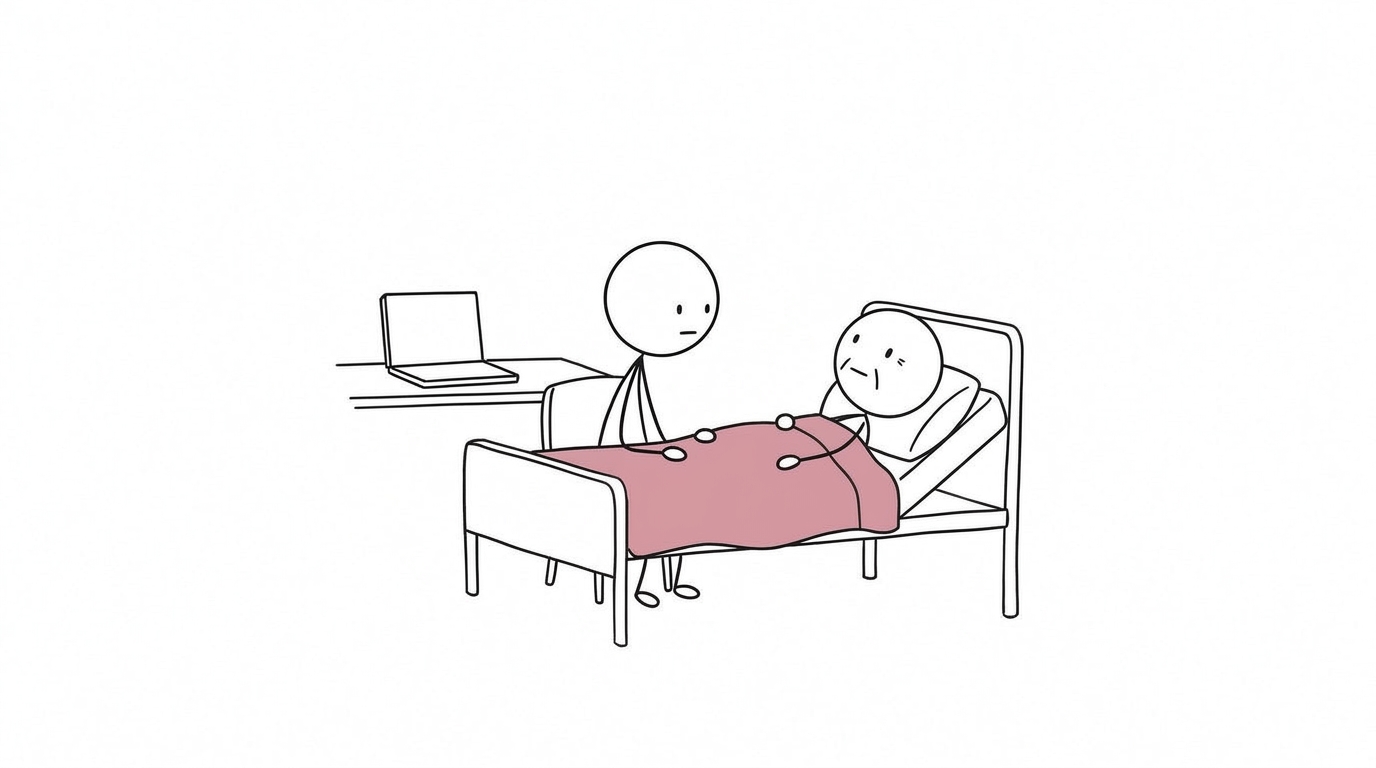
Paradoxically, the more widely hospitals and clinics adopt AI, the more clinical quality rises and becomes standardized everywhere. Consistent, high-quality care wherever a patient goes is a welcome shift. Yet once clinical quality levels out, what remains is the human connection—the clinician a patient wants to see, and the colleagues people want to work alongside. Workplaces where talking with patients and families and thinking together across professions feel rewarding naturally attract people, support task-sharing, and help recruit younger staff. Rather than filling saved charting time with more screen work, returning those minutes to the bedside matters most. The more adeptly we use AI, the more human warmth matters alongside it.
References
- 新たな地域医療構想等に関する検討会. 新たな地域医療構想に関するとりまとめ [Study Group on the New Regional Healthcare Plans. Summary report on the new regional healthcare plans]. December 18, 2024. https://www.mhlw.go.jp/content/10800000/001357306.pdf
- 厚生労働省. 令和4年版厚生労働白書(概要) [Ministry of Health, Labour and Welfare. Annual Health, Labour and Welfare Report 2022 (summary)]. September 2022. https://www.mhlw.go.jp/content/000988388.pdf
- 厚生労働省医政局長. 地域医療構想の作成について [Director-General of the Health Policy Bureau, Ministry of Health, Labour and Welfare. Preparation of regional healthcare plans]. August 5, 2026. https://www.mhlw.go.jp/content/10800000/001734247.pdf
- 医師の働き方改革の推進等に関する検討会. 資料 [Study Group on Promoting Work-Style Reform for Physicians. Meeting materials]. October 29, 2026.
- Kalai AT, et al. Why Language Models Hallucinate. arXiv:2509.04664. 2025. https://arxiv.org/abs/2509.04664
- Ouyang L, et al. Training language models to follow instructions with human feedback. NeurIPS 2022. arXiv:2203.02155. https://arxiv.org/abs/2203.02155
- Sharma M, et al. Towards Understanding Sycophancy in Language Models. ICLR 2024. arXiv:2310.13548. https://arxiv.org/abs/2310.13548
- Wei J, et al. Chain-of-Thought Prompting Elicits Reasoning in Large Language Models. NeurIPS 2022. arXiv:2201.11903. https://arxiv.org/abs/2201.11903
- OpenAI. Learning to Reason with LLMs. September 12, 2024. https://openai.com/index/learning-to-reason-with-llms/
- Lewis P, et al. Retrieval-Augmented Generation for Knowledge-Intensive NLP Tasks. NeurIPS 2020. arXiv:2005.11401. https://arxiv.org/abs/2005.11401
- Anthropic. Claude Code overview (official documentation). Accessed November 20, 2026. https://code.claude.com/docs/en/overview
- OpenAI. Codex (official documentation). Accessed November 20, 2026. https://developers.openai.com/codex
- OpenAI. dots のご紹介 [Introducing dots]. September 29, 2026. https://openai.com/ja-JP/index/introducing-dots/
- Meta. Introducing Muse. September 8, 2026 (updated November 10, 2026). https://about.fb.com/news/2026/09/introducing-muse/
- Meta. パーソナルAIエージェント「Muse」日本で提供開始 [Personal AI Agent "Muse" Launches in Japan]. October 2026. https://about.fb.com/ja/news/2026/10/muse-personal-ai-agent-launches-in-japan/
- Meta. Bringing Specialized Models to Muse and Meta AI. November 6, 2026. https://research.meta.ai/blog/specialized-models-for-muse-and-metaai
- Fang CM, et al. How AI and Human Behaviors Shape Psychosocial Effects of Extended Chatbot Use: A Longitudinal Randomized Controlled Study. arXiv:2503.17473. 2025. https://arxiv.org/abs/2503.17473
- Ubie株式会社. プレスリリース(相澤病院での導入事例) [Ubie, Inc. Press release (Aizawa Hospital implementation case)]. July 1, 2026. https://prtimes.jp/main/html/rd/p/000000216.000048083.html
- 厚生労働省. これからはじめる 看護DX事例紹介 医療機関編 [Ministry of Health, Labour and Welfare. Getting started with nursing DX: Case studies for medical institutions]. August 2026. Case 10. https://www.mhlw.go.jp/content/001749587.pdf
- Booth SE, et al. Impact of Unrestricted Artificial Intelligence Scribe Deployment in a Single Health System on Clinician Workload and Productivity. Ann Intern Med. 2026. doi:10.7326/ANNALS-25-05294
- Rotenstein LS, et al. Changes in Clinician Time Expenditure and Visit Quantity With Adoption of Artificial Intelligence–Powered Scribes. JAMA. 2026;335:1408. doi:10.1001/jama.2026.2253
- 令和8年度診療報酬改定. 医師事務作業補助体制加算 施設基準 [FY2026 Medical Fee Revision. Facility standards for the Physician Clerical Assistant System Addition].
- 厚生労働省. 医療情報システムの安全管理に関するガイドライン 第7.0版 [Ministry of Health, Labour and Welfare. Guidelines for the security management of medical information systems, Version 7.0]. https://www.mhlw.go.jp/stf/shingi/0000516275_00006.html
- 厚生労働省. 医療情報システムの安全管理に関するガイドライン 第7.0版 Q&A [Ministry of Health, Labour and Welfare. Guidelines for the security management of medical information systems, Version 7.0, Q&A]. September 2026 edition. https://www.mhlw.go.jp/content/10808000/001752355.pdf
- Jesudason D, et al. OpenAI's ‘Deep Research’ for the Generation of Comprehensive Referenced Medical Reviews. ANZ J Surg. 2025;95:2250–2252. doi:10.1111/ans.70161
- OpenEvidence. Official partner list (verified September 2026).
- Mount Sinai Health System. Announcement (March 31, 2026).
- Jagarapu J, et al. medRxiv. 2025 (preprint).
- クエチアピンフマル酸塩 添付文書 [Quetiapine fumarate package insert]. 医薬品医療機器総合機構(PMDA) [Pharmaceuticals and Medical Devices Agency (PMDA)].
- Witt K, et al. Diagnostics and treatment of impulse control disorders, psychosis and delirium: systemic review-based guideline “Parkinson’s disease” of the German Society of Neurology. J Neurol. 2024;271:7402–7421. doi:10.1007/s00415-024-12576-x
- Qazi IA, et al. Automation Bias in Large Language Model–Assisted Diagnostic Reasoning among Physicians Trained in AI Literacy. NEJM AI. 2026;3(5). doi:10.1056/AIoa2501001
- Song J, et al. Human-in-the-Loop Large Language Model–Augmented Diagnostic Reasoning in Thoracic Imaging: Impact of Radiologic Expertise. AJR. 2026;227:e2634999. doi:10.2214/AJR.26.34999
- 日本医師会. 答申「AIに関する臨床的課題と生命倫理について」 [Japan Medical Association. Report: Clinical issues and bioethics related to AI]. April 8, 2026.
- 厚生労働省. e-ヘルスネット「禁煙の効果」 [Ministry of Health, Labour and Welfare. e-Healthnet: Benefits of smoking cessation].
- 総務省・経済産業省. 医療情報を取り扱う情報システム・サービスの提供事業者における安全管理ガイドライン 第2.0版 [Ministry of Internal Affairs and Communications & Ministry of Economy, Trade and Industry. Security management guidelines for providers of information systems and services handling medical information, Version 2.0]. Revised March 28, 2025.
- 厚生労働省. 医療情報システムの安全管理に関するガイドライン 第7.0版 システム運用編 [Ministry of Health, Labour and Welfare. Guidelines for the security management of medical information systems, Version 7.0, System Operations Volume]. June 2026. Chapter 17. https://www.mhlw.go.jp/content/10808000/001716297.pdf
- 厚生労働省. 医療情報システムの安全管理に関するガイドライン 第7.0版 保守委託機関編・経営管理編 [Ministry of Health, Labour and Welfare. Guidelines for the security management of medical information systems, Version 7.0, Outsourced Maintenance & Executive Management Volumes]. June 2026. https://www.mhlw.go.jp/content/10808000/001716291.pdf
- FIXER・藤田学園. 医師の92%が業務効率化につながったと回答 生成AIを活用した「退院時サマリー作成支援システム」が実用化 [FIXER & Fujita Academy. 92% of physicians report improved operational efficiency as generative AI discharge summary support system enters practical use]. May 27, 2025. https://fixer.co.jp/news/2025/05/2025_0527_001_jointly_developed_a_system_that_utilizes_ai_with_fujita_academy/
- 富士通Japan. 生成AIを活用した医療文章作成支援サービスを名古屋医療センター様に導入し、退院サマリを対象に本格運用開始 [Fujitsu Japan. Generative AI medical documentation support service deployed at Nagoya Medical Center, launching full-scale operation for discharge summaries]. November 19, 2025. https://info.archives.global.fujitsu/jp/group/fjj/documents/about/resources/press-releases/2025/1119-01.pdf
- TXP Medical. 生成AIを利用した急性期病院向け音声入力アプリをリリース [TXP Medical. Release of voice input app using generative AI for acute-care hospitals]. December 3, 2024. https://txpmedical.jp/news/6NdQuxfuT8L7gdB3xbmtNG/
- TXP Medical. SpeechER(製品情報) [SpeechER (product information)]. Accessed November 20, 2026. https://txpmedical.jp/service/speecher/
- NEC. MegaOak AIメディカルアシスト(製品情報) [MegaOak AI Medical Assist (product information)]. Accessed November 20, 2026. https://jpn.nec.com/medical_healthcare/aimedicalassist/index.html
- アルム. 訪問看護の報告書作成時間を最大42%削減 AIで“看護師がケアに使える時間”を創出 [Allm. Reducing visiting nursing report creation time by up to 42%: creating time for nurses to focus on care with AI]. May 25, 2026. https://www.allm.net/news/20260525/
- メディカルインフォマティクス. 在宅医療専門クラウド型電子カルテ「homis」が全面リニューアルしました! [Medical Informatics. Cloud EHR "homis" for home healthcare fully renewed]. April 4, 2024. https://prtimes.jp/main/html/rd/p/000000015.000074761.html
- 松原アーバンクリニック. 医療機関におけるAI技術活用促進事業 事業成果報告書(令和6年度分) [Matsubara Urban Clinic. Project outcomes report for the AI technology adoption promotion program in medical institutions (FY2024)]. Tokyo Metropolitan Government. https://www.hokeniryo.metro.tokyo.lg.jp/documents/d/hokeniryo/ai_matubara
- 厚生労働省. 電子カルテ情報共有サービス 概要案内 2.1.0版 [Ministry of Health, Labour and Welfare. Electronic Health Record Information Sharing Service overview guide, Version 2.1.0]. July 2026. https://www.mhlw.go.jp/content/10800000/001457777.pdf
- 厚生労働省. 今後のNDBについて(第11回匿名医療情報等の提供に関する専門委員会 資料1) [Ministry of Health, Labour and Welfare. Future of the NDB (11th Expert Committee on Provision of Anonymized Medical Information, Document 1)]. August 31, 2022. https://www.mhlw.go.jp/content/12400000/000982804.pdf
- 厚生労働省. NDBの利用を検討している方へのマニュアル [Ministry of Health, Labour and Welfare. Manual for prospective NDB users]. October 2026 edition. https://www.mhlw.go.jp/content/12400000/001756587.pdf
- 健康・医療情報の活用拡大について(資料3) [Expanding the utilization of health and medical information (Document 3)]. March 5, 2026. https://www.mhlw.go.jp/content/10904750/001665815.pdf
- Chaiyachati KH, et al. Assessment of Inpatient Time Allocation Among First-Year Internal Medicine Residents Using Time-Motion Observations. JAMA Intern Med. 2019;179:760. doi:10.1001/jamainternmed.2019.0095
- Garibaldi BT, Russell SW. Strategies to Reinvigorate the Bedside Clinical Encounter. N Engl J Med. 2025;393:2142–2150. doi:10.1056/NEJMra2500226
- Peabody FW. The Care of the Patient. JAMA. 1927;88:877. doi:10.1001/jama.1927.02680380001001