Lawsuits over Character.AI and research on the risks and benefits of companion AI
Contents
The use of AI designed to act as a conversational partner (companion AI) is growing. In a 2025 Common Sense Media survey of 1,060 U.S. teens aged 13 to 17, 72% had used companion AI, and 52% used it at least several times a month1. These numbers are not limited to a single service. The operator of the conversational AI service Character.AI filed for bankruptcy in October 2026, and the sale of its assets—including its app and conversation data—is underway. A filing submitted to the court by state attorneys general in that proceeding states that the service has more than 20 million monthly active users and that over 2.1 million of the accounts created in the United States had a self-reported age under 182.
1,060 U.S. teens aged 13–17 (companion AI overall)
Character.AI U.S. accounts (through March 13, 2025)
Based on Common Sense Media (2025) and the state attorneys general court filing (October 2026)
Regarding Character.AI, a mother sued the operating company and others in October 2024 over the death of her 14-year-old son, alleging problems with his interactions with the chatbot and with its design3. On the other hand, in a survey of 1,006 students who use Replika, another companion AI, 3% (30 respondents) reported that Replika helped stop suicidal ideation4. The former consists of allegations in a legal complaint; the latter is self-reported by users.
According to the state attorneys general filing, the conversations include disclosures about the mental health and health of users, including minors2. For clinicians who meet users in clinical or counseling settings, parents overseeing their children's use, and users themselves, understanding what is alleged in lawsuits, what research has shown and where its limits lie, and how conversation data is handled in bankruptcy proceedings can inform their decisions.
Lawsuits involving Character.AI and current status
All harms described in the lawsuits below are allegations in legal complaints. No court has found a causal link between chatbot use and the alleged harms.
- October 2024Garcia lawsuit filed. Company announces safeguards for users under 18
- December 2024Texas families file suit. Texas Attorney General opens investigation
- May 2025Court largely denies motions to dismiss in the Garcia case
- August 2025Texas Attorney General investigates misleading mental health service claims
- September 2025FTC orders seven companies to submit information. Families file suits in Colorado and New York
- October 2025California SB 243 signed. Company announces end of open-ended chat for users under 18
- January 2026Settlements in principle reported in five family suits. Kentucky files suit
- May 2026Pennsylvania files suit
- October 2026Company files for bankruptcy. State attorneys general submit court filing
- November 2026Initial bidder selected for remaining assets. Sale hearing scheduled for December 3–4
Based on complaints, government announcements, company announcements, and court filings
On October 22, 2024, Garcia v. Character Technologies was filed in the U.S. District Court for the Middle District of Florida3. Following the death of her 14-year-old son, the mother sued operating company Character Technologies, co-founders Noam Shazeer and Daniel De Freitas, Google, and others3. The plaintiff alleges sexual and emotional interactions with the chatbot, inadequate responses to statements about suicide, dangerous design, and failure to warn3.
The company moved to dismiss the lawsuit, and on May 20, 2025, the court largely denied the motions5. The order stated that the court was not prepared at that stage to hold that the chatbot's outputs are protected speech under the First Amendment5. This was a ruling on whether the case could proceed, not a final determination of the company's liability5.
In December 2024, A.F. v. Character Technologies was filed in the U.S. District Court for the Eastern District of Texas6. Two families allege that chatbots encouraged self-harm in teens, generated responses that damaged parent-child relationships or condoned violence against parents, and exposed minors to sexual content6. In September 2025, two lawsuits were filed in Colorado—including one over the death of a 13-year-old girl—and one was filed in New York7,8. These families allege sexual conversations, psychological dependence, and inadequate responses to statements about suicide7.
On January 7, 2026, it was reported that Character.AI and Google had reached mediated settlements in principle in all five cases—in Florida, Texas, Colorado (two cases), and New York8. The terms were not disclosed and are reported not to include an admission of liability8.
Regulatory, legislative, and company actions
Government actions have ranged from investigations to lawsuits. In December 2024, the Texas Attorney General opened an investigation into companies including Character.AI regarding children's privacy and safety practices. In August 2025, the Texas Attorney General announced an investigation into Character.AI and another company over whether chatbots misled children into believing they were mental health services9,10. On September 11, 2025, the U.S. Federal Trade Commission (FTC) ordered seven companies—including Character Technologies, Alphabet, Meta, and OpenAI—to report on how they measure the effects of companion AI chatbots on children and teens, as well as age restrictions, risk disclosures, and handling of personal data11. This is an inquiry under Section 6(b) of the FTC Act, not an enforcement action11.
Two government actions have resulted in lawsuits. On January 8, 2026, the Kentucky Attorney General sued Character Technologies and its two co-founders in state court12. The complaint alleges violations of consumer protection law, unlawful collection of children's data, and privacy violations, and seeks injunctive relief and civil penalties12. On May 1, 2026, Pennsylvania's Department of State and State Board of Medicine filed suit13. Alleging that chatbots posed as "psychiatrists," displayed state medical license numbers, and acted as though they could evaluate depression or make medication decisions, the state seeks an injunction under its Medical Practice Act13.
| Lawsuit | Main allegations (not court findings) |
|---|---|
| Garcia caseFlorida, October 2024 | Suit over the death of a 14-year-old boyAlleges sexual and emotional interactions, inadequate responses to suicidal statements, defective design, and failure to warn. In May 2025, the court largely denied motions to dismiss |
| A.F. caseTexas, December 2024 | Two families alleged harms to teen childrenAlleges encouragement of self-harm, responses condoning violence toward parents, and sexual content shown to minors |
| Colorado and New York suitsSeptember 2025 | Suits including one over the death of a 13-year-old girlAlleges sexual conversations, psychological dependence, and inadequate responses to suicidal statements |
| KentuckyJanuary 2026 | Suit by the state attorney generalAlleges consumer protection violations, unlawful collection of children's data, and privacy violations |
| PennsylvaniaMay 2026 | Suit by the State Board of Medicine and Department of StateSought an injunction regarding chatbots that posed as psychiatrists and displayed medical license numbers |
Based on complaints and court orders. Settlements in principle were reported in January 2026 for the five family lawsuits
In legislation, California's SB 243 was signed on October 13, 2025, and took effect on January 1, 202614. It requires operators of companion chatbots to14:
- Notify users that they are interacting with AI
- Maintain and publish protocols for directing users to crisis resources when suicidal ideation or self-harm is expressed
- Display break reminders every three hours and prevent sexual content for users known to be minors
Users harmed by a violation may sue the operator14.
The company has also announced safety measures. In October 2024, it announced model adjustments for users under 18, crisis helpline prompts when terms related to self-harm or suicide are entered, notices reminding users that the character is AI, and alerts after one hour of use15. On October 29, 2025, it announced it would end open-ended chat for users under 18 by November 2516. During the transition, daily use would be reduced starting from two hours per day, using an in-house age-assurance model combined with third-party age verification16. As reasons, the company cited news reports, questions from regulators, and concerns about how open-ended chat itself could affect teens even when content controls work as intended16.
Bankruptcy proceedings and the fate of conversation data
On October 12, 2026, operating company Character Technologies filed for Chapter 11 bankruptcy in the United States17. Citing legal, regulatory, and operational headwinds, the company stated it would sell its assets under court supervision17.
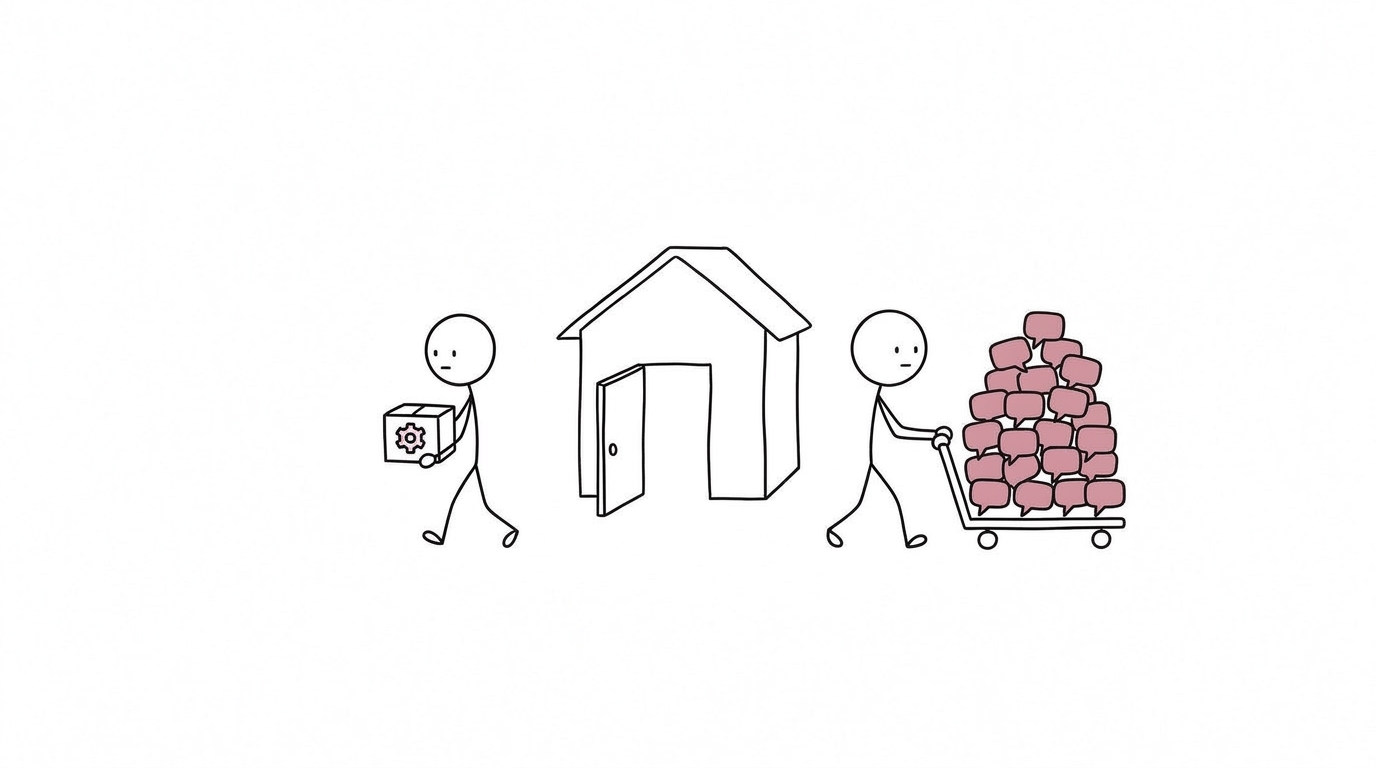
The sale is divided into two parts. Disney is the initial (stalking horse) bidder to acquire a non-exclusive license to the company's technology and patents for $20 million, which does not include the app, user data, conversations, or training data18. For the remaining assets—including the app, AI models, user account information, chat contents, and training data—Smirks and Pangs Acquisition LLC was selected on November 14 as the initial (stalking horse) bidder for $10 million19. A hearing on whether to approve the sale is scheduled for December 3 and 419.
Based on the sale motion (Doc 15) and the November 14 filing (Doc 164)
The company's FAQ states that users can export their data and delete their accounts through the app or website17.
The state attorneys general are asking that any buyer be required to remove characters claiming professional credentials, maintain crisis-response features, and refrain from secondary uses of conversation data beyond the scope of user consent2. Their filing also asks that all users be given an opportunity to delete their data before any sale2.
- November 18Deadline to object to designation of Smirks and Pangs
- November 24Bid deadline
- December 1Auction
- December 3–4Sale approval hearing
Based on the court notice posted by the company and the November 14 filing (Doc 164)
Studies showing risks
What the studies below can show depends on their study design.
| Study design | What it shows / What it cannot show |
|---|---|
| Cross-sectional studiesZhang et al., Buck et al., Maples et al. | Associations at a single point in timeCannot show whether use or distress came first |
| Post analysesNamvarpour et al., De Freitas et al. (2026) | What users describe and how it shiftsCannot show how often this occurs across all users |
| Simulated scenario evaluationsMoore et al., McBain et al. | Appropriateness of responsesCannot show how often harm occurs in real-world use |
| Randomized trialHeinz et al. | Difference compared with a waitlist groupNot a comparison with human therapy |
| Meta-analysesLi et al., Mokhtari Masoumi Alamdarloo et al. | Average effects pooled across trialsNot the effect of any individual service |
Based on the studies discussed in this article
Two studies examined Character.AI users directly. Zhang et al. surveyed 1,131 adult U.S. users and analyzed 4,664 conversations from 237 of them20. Those whose primary use was "companionship" had lower well-being, and this association was stronger among heavy users and those who engaged in more self-disclosure20. People with smaller in-person social networks were also more likely to use the service for companionship20. Because this was a cross-sectional study at a single time point, it cannot distinguish whether use lowered well-being or whether people with lower well-being turned to the service for companionship20.
Namvarpour et al. qualitatively analyzed 318 posts on the Character.AI Reddit forum from users who self-identified as ages 13 to 17, categorizing accounts of disruptions to sleep, schoolwork, and relationships, as well as distress when trying to stop21. Because this is an analysis of posts, it does not show how frequently these experiences occur among teens overall21.
Other studies evaluated response quality. Moore et al. tested large language models and commercial therapy bots, including Character.AI's "Therapist" bots22. The bots produced responses expressing stigma toward mental illness and gave inappropriate responses in more than 20% of simulated scenarios; in the same evaluation, 16 human therapists responded appropriately 93% of the time22. According to the study, Character.AI's "Licensed CBT Therapist" bot had nearly 20 million interactions22. However, this was an evaluation of simulated scenarios, not a measure of how often harm occurs in actual use22.
McBain et al. asked ChatGPT, Claude, and Gemini 30 suicide-related questions 100 times each23. None of the models directly answered the highest-risk questions and all directly answered the lowest-risk questions, but responses to intermediate-risk questions were inconsistent23. This study tested prepared questions and did not include Character.AI23.
Looking at psychiatric symptoms, Buck et al. conducted a cross-sectional survey of 1,003 U.S. young adults24. Compared with others, the group at high risk for psychosis (267 participants) had 1.70 to 2.56 times the odds of intensive generative AI use—such as using it multiple times a day or for 30 minutes or more per day—and 1.76 to 3.08 times the odds of viewing AI as a friend, therapist, or romantic partner24. Within this group, 13.3% to 30.7%, depending on the item, reported delusion-like experiences involving AI interactions24. This survey cannot determine whether higher risk or heavier use came first24.
Another study examined the impact of company updates. De Freitas et al. (2026) analyzed 54,861 community posts and seven surveys (1,452 participants total) before and after two changes: Replika's removal of sexual roleplay and ChatGPT's transition to GPT-525. Negative posts increased by 24.7 percentage points for Replika and 13.0 percentage points for ChatGPT, showing that company updates can trigger distress resembling the loss of an attachment figure25. The analysis covered people who posted in relevant communities and survey respondents25.
Based on De Freitas et al. (2026). Compares before and after Replika removed sexual roleplay and ChatGPT switched to GPT-5
Diel et al. conducted a scoping review synthesizing 119 publications in this field26. While inappropriate responses, correlations between dependent use and psychiatric symptoms, and the potential to reinforce delusions are discussed in the literature, they concluded that the frequency of harm and causal relationships remain unknown in many areas26.
Studies showing benefits
The study by Maples et al. mentioned at the outset was a cross-sectional survey of 1,006 students using Replika4. Respondents reported higher loneliness than typical students alongside high perceived social support4. They used Replika in multiple roles—as a friend, therapist, and intellectual mirror—and 3% (30 respondents) reported that Replika helped stop suicidal ideation4. These results are self-reported and have no non-user control group4. A critical commentary ("Matters arising") on the interpretation was also published in the same journal27.
On loneliness, De Freitas et al. (2025) reported that interacting with a companion AI reduced loneliness to a degree comparable to talking with another person, and more than activities such as watching YouTube28. In a one-week longitudinal study following the same individuals, loneliness dropped immediately after each session, and feeling "heard" explained that reduction28. What was demonstrated is an immediate post-use effect; long-term effects were not shown28.
Among studies examining symptom improvement, randomized trials assign participants by chance to compare groups. Heinz et al. evaluated "Therabot," a generative AI chatbot fine-tuned for therapy by clinicians, in a four-week randomized trial of 210 participants29. The comparison group was a waitlist group that received no intervention during the trial. Compared with the waitlist group, the Therabot group showed greater improvement in depression (PHQ-9 change of −6.13 vs. −2.63), as well as improvements in anxiety and high-risk eating disorder symptoms29. Participants rated the therapeutic alliance—the collaborative bond with a therapist—at a level comparable to human therapists29. The comparator was a waitlist group; this trial did not compare outcomes against human-delivered therapy29. In addition, Therabot was tuned for treatment rather than being an entertainment companion AI29.
Based on Heinz et al. (2025). Longer bars indicate a larger drop in depression symptom scores
Two meta-analyses have also pooled results across trials of conversational agents designed for therapy or support. Li et al. pooled 15 randomized trials of AI-based conversational agents and reported improvements in depression (effect size g=0.64) and psychological distress (g=0.70)30. Improvement in overall psychological well-being was not statistically significant30. Mokhtari Masoumi Alamdarloo et al. pooled 48 randomized trials (28,071 participants) of AI-based and rule-based conversational agents, reporting small-to-moderate effects on depression (standardized mean difference, SMD −0.27), anxiety (−0.20), and stress (−0.26)31. Both reflect average effects pooled across trials rather than the effect of any individual service30,31.
Connection to emotional dependence
The risks raised in lawsuits and research fall into two distinct categories. The first involves relying on AI as a relational partner. The families in Colorado and New York allege psychological dependence7. In Zhang et al., users seeking companionship had lower well-being, with a stronger link among heavy users and high self-disclosers20. In Buck et al., participants at high risk for psychosis had higher odds of viewing AI as a friend, therapist, or romantic partner24. De Freitas et al. (2026) showed that company updates can trigger distress resembling the loss of an attachment figure25. The second category is the appropriateness of responses during crises—the focus of Moore et al. and McBain et al.—which concerns the outputs themselves rather than how users relate to the bot22,23.
The first category corresponds to emotional dependence, in which users experience AI as an understanding confidant or friend. Which design features and user characteristics make emotional dependence more likely were explored in When AI becomes a companion. That article notes that while AI's constant availability and non-judgmental tone support many users, it can reduce opportunities to seek help from other people among minors or socially isolated individuals.
The benefits side involves the same underlying dynamic. In De Freitas et al.'s (2025) longitudinal study, feeling "heard" explained the drop in loneliness immediately after use28. Reactions to ChatGPT's transition to GPT-5 were also discussed in that earlier article through an analysis of posts asking to keep the older model.
What is established and what remains unknown
| Study | Findings and what the study cannot show |
|---|---|
| Zhang et al.1,131 Character.AI users, cross-sectional | Companionship use linked to lower well-beingStronger with heavy use and high self-disclosure; cannot show causality |
| De Freitas et al. (2026)54,861 posts and 1,452 survey respondents | Negative posts rose after service updates+24.7 percentage points for Replika, +13.0 for ChatGPT |
| Moore et al.Response evaluation in simulated scenarios | Stigmatizing or inappropriate responses observedInappropriate in over 20% of scenarios; not real-world harm frequency |
| Buck et al.1,003 young adults, cross-sectional | Intensive use more common in high psychosis-risk groupOdds ratio 1.70–2.56; cannot show which came first |
| Maples et al.1,006 student Replika users, cross-sectional | 3% reported it helped stop suicidal ideationSelf-reported, with no control group |
| De Freitas et al. (2025)Experiments and 1-week longitudinal study | Loneliness fell immediately after conversationsComparable to talking with a person; long-term effects not shown |
| Heinz et al.Therabot, 210-person randomized trial | Depression and anxiety improved vs. waitlist groupBot tuned for therapy; compared with waitlist |
| Two meta-analyses15 and 48 randomized trials | Small-to-moderate effects on depression, anxiety, etc.Studied conversational agents designed for therapy or support |
Based on published papers. Top four show risks; bottom four show benefits
Gaps in evidence remain on both sides. Most surveys showing risks are cross-sectional and cannot separate whether use causes distress or whether distressed people use the services more20,24. How frequently harm occurs is also unknown in many areas26. On the benefit side, whether reductions in loneliness persist over time has not been shown28, and results from bots tuned for clinical treatment do not test entertainment companion AIs29. Reports that Replika helped stop suicidal ideation come from self-reports without a control group4. In the courts, no ruling has established causation between chatbot use and alleged harms, and the five family lawsuits are reported to have reached settlements in principle without an admission of liability8.
Based on the studies and litigation status discussed in this article
References
- Robb MB, Mann S. Talk, trust, and trade-offs: how and why teens use AI companions. Common Sense Media; 2025. https://www.commonsensemedia.org/sites/default/files/research/report/talk-trust-and-trade-offs_2025_web.pdf
- In re Character Technologies, Inc., No. 26-11603 (BLS) (Bankr. D. Del.), Docket No. 33. Notice of interest and reservation of rights by the coalition of the state attorneys general. filed October 14, 2026. https://ag.ny.gov/sites/default/files/court-filings/alaska-et-al-v-characters-technologies-inc-notice-of-interest-2026.pdf
- Garcia v. Character Technologies, Inc., No. 6:24-cv-01903 (M.D. Fla.). Complaint. filed October 22, 2024. https://techjusticelaw.org/wp-content/uploads/2024/10/FILED-COMPLAINT_Garcia-v-Character-Technologies-Inc.pdf
- Maples B, Cerit M, Vishwanath A, Pea R. Loneliness and suicide mitigation for students using GPT3-enabled chatbots. NPJ Ment Health Res. 2024;3(1):4. https://doi.org/10.1038/s44184-023-00047-6
- Garcia v. Character Technologies, Inc., No. 6:24-cv-01903 (M.D. Fla.). Order on motions to dismiss. May 20, 2025. https://www.courthousenews.com/wp-content/uploads/2025/05/garcia-v-character-technologies-order.pdf
- A.F. v. Character Technologies, Inc., No. 2:24-cv-01014 (E.D. Tex.). Complaint. filed December 2024. https://techjusticelaw.org/wp-content/uploads/2025/02/A.F.-on-behalf-of-J.F.-et-al-v.-CHARACTER-TECHNOLOGIES-INC.-et-al.pdf
- Montoya v. Character Technologies, Inc., No. 1:25-cv-02907 (D. Colo.). Complaint. filed September 15, 2025. https://docketnexus.com/doc/452408174.pdf
- CNN. Character.AI and Google agree to settle lawsuits over teen suicide. January 7, 2026. https://www.cnn.com/2026/01/07/business/character-ai-google-settle-teen-suicide-lawsuit
- Texas Attorney General. Attorney General Ken Paxton launches investigations into Character.AI, Reddit, Instagram, Discord, and other companies over children's privacy and safety practices. December 12, 2024. https://www.texasattorneygeneral.gov/news/releases/attorney-general-ken-paxton-launches-investigations-characterai-reddit-instagram-discord-and-other
- Texas Attorney General. Attorney General Ken Paxton investigates Meta and Character.AI for misleading children with deceptive AI-generated mental health services. August 18, 2025. https://www.texasattorneygeneral.gov/news/releases/attorney-general-ken-paxton-investigates-meta-and-characterai-misleading-children-deceptive-ai
- Federal Trade Commission. FTC launches inquiry into AI chatbots acting as companions. September 11, 2025. https://www.ftc.gov/news-events/news/press-releases/2025/09/ftc-launches-inquiry-ai-chatbots-acting-companions
- Commonwealth of Kentucky v. Character Technologies, Inc., No. 26-CI-00029 (Franklin Cir. Ct.). Complaint. filed January 8, 2026. https://www.ag.ky.gov/Press%20Release%20Attachments/CTI%20Complaint%20Motion%20and%20Order%20Filed.pdf
- Commonwealth of Pennsylvania, Department of State, State Board of Medicine v. Character Technologies, Inc., No. 220 MD 2026 (Pa. Commw. Ct.). filed May 1, 2026. https://www.pa.gov/content/dam/copapwp-pagov/en/governor/documents/dos%20character.ai%20complaint%20marked%20accepted%2005.01.26.pdf
- California Legislature. SB-243 Companion chatbots. Chapter 677, Statutes of 2025. https://leginfo.legislature.ca.gov/faces/billNavClient.xhtml?bill_id=202520260SB243
- Character.AI. Community safety updates. October 22, 2024. https://blog.character.ai/community-safety-updates/
- Character.AI. Taking bold steps to keep teen users safe on Character.AI. October 29, 2025. https://blog.character.ai/u18-chat-announcement/
- Character.AI. An update on Character.ai. October 12, 2026. https://blog.character.ai/an-update-on-character-ai/
- In re Character Technologies, Inc., No. 26-11603 (BLS) (Bankr. D. Del.), Docket No. 15. filed October 13, 2026. https://cases.stretto.com/public/x936/14939/PLEADINGS/1493910132680000000114.pdf
- In re Character Technologies, Inc., No. 26-11603 (BLS) (Bankr. D. Del.), Docket No. 164. filed November 14, 2026. https://cases.stretto.com/public/x936/14939/PLEADINGS/1493911152680000000001.pdf
- Zhang Y, Zhao D, Hancock JT, Kraut R, Yang D. Interaction with AI companions and psychological well-being. Nat Hum Behav. 2026;10(10):1966-1980. https://doi.org/10.1038/s41562-026-02516-2
- Namvarpour M, Brofsky B, Medina JY, Akter M, Razi A. Understanding teen overreliance on AI companion chatbots through self-reported Reddit narratives. Proceedings of the 2026 CHI Conference on Human Factors in Computing Systems. 2026:1-19. https://doi.org/10.1145/3772318.3790597
- Moore J, Grabb D, Agnew W, et al. Expressing stigma and inappropriate responses prevents LLMs from safely replacing mental health providers. Proceedings of the 2025 ACM Conference on Fairness, Accountability, and Transparency. 2025:599-627. https://doi.org/10.1145/3715275.3732039
- McBain RK, Cantor JH, Zhang LA, et al. Evaluation of alignment between large language models and expert clinicians in suicide risk assessment. Psychiatr Serv. 2025;76(11):944-950. https://doi.org/10.1176/appi.ps.20250086
- Buck B, Maheux AJ. Psychosis risk and generative artificial intelligence use frequency, motivations, and delusion-like experiences: cross-sectional survey study. J Med Internet Res. 2026;28:e85038. https://doi.org/10.2196/85038
- De Freitas J, Castelo N, Uğuralp AK, Oğuz-Uğuralp Z. Mourning the loss of AI companions. Nat Hum Behav. 2026. https://doi.org/10.1038/s41562-026-02569-3
- Diel A, Torous J, Cuijpers P, et al. A scoping review on the mental health harms of LLM-based chatbots. NPJ Digit Med. 2026;9(1):644. https://doi.org/10.1038/s41746-026-03054-x
- Zimmerman JW, Ruiz AJ. Matters arising: a response to loneliness and suicide mitigation for students using GPT3-enabled chatbots. NPJ Ment Health Res. 2025;4(1):60. https://doi.org/10.1038/s44184-024-00083-w
- De Freitas J, Oğuz-Uğuralp Z, Uğuralp AK, Puntoni S. AI companions reduce loneliness. J Consum Res. 2025;52(6):1126-1148. https://doi.org/10.1093/jcr/ucaf040
- Heinz MV, Mackin DM, Trudeau BM, et al. Randomized trial of a generative AI chatbot for mental health treatment. NEJM AI. 2025;2(4):AIoa2400802. https://doi.org/10.1056/AIoa2400802
- Li H, Zhang R, Lee YC, Kraut RE, Mohr DC. Systematic review and meta-analysis of AI-based conversational agents for promoting mental health and well-being. NPJ Digit Med. 2023;6(1):236. https://doi.org/10.1038/s41746-023-00979-5
- Mokhtari Masoumi Alamdarloo S, Mirzakhani A, Azhdarloo M, Haghani-Samani E, Nazari A. Effectiveness of AI and rule-based conversational agents for depression, anxiety and stress: a meta-analysis. NPJ Digit Med. 2026;9(1):650. https://doi.org/10.1038/s41746-026-02820-1